This post is for caregivers as well as stroke survivors.
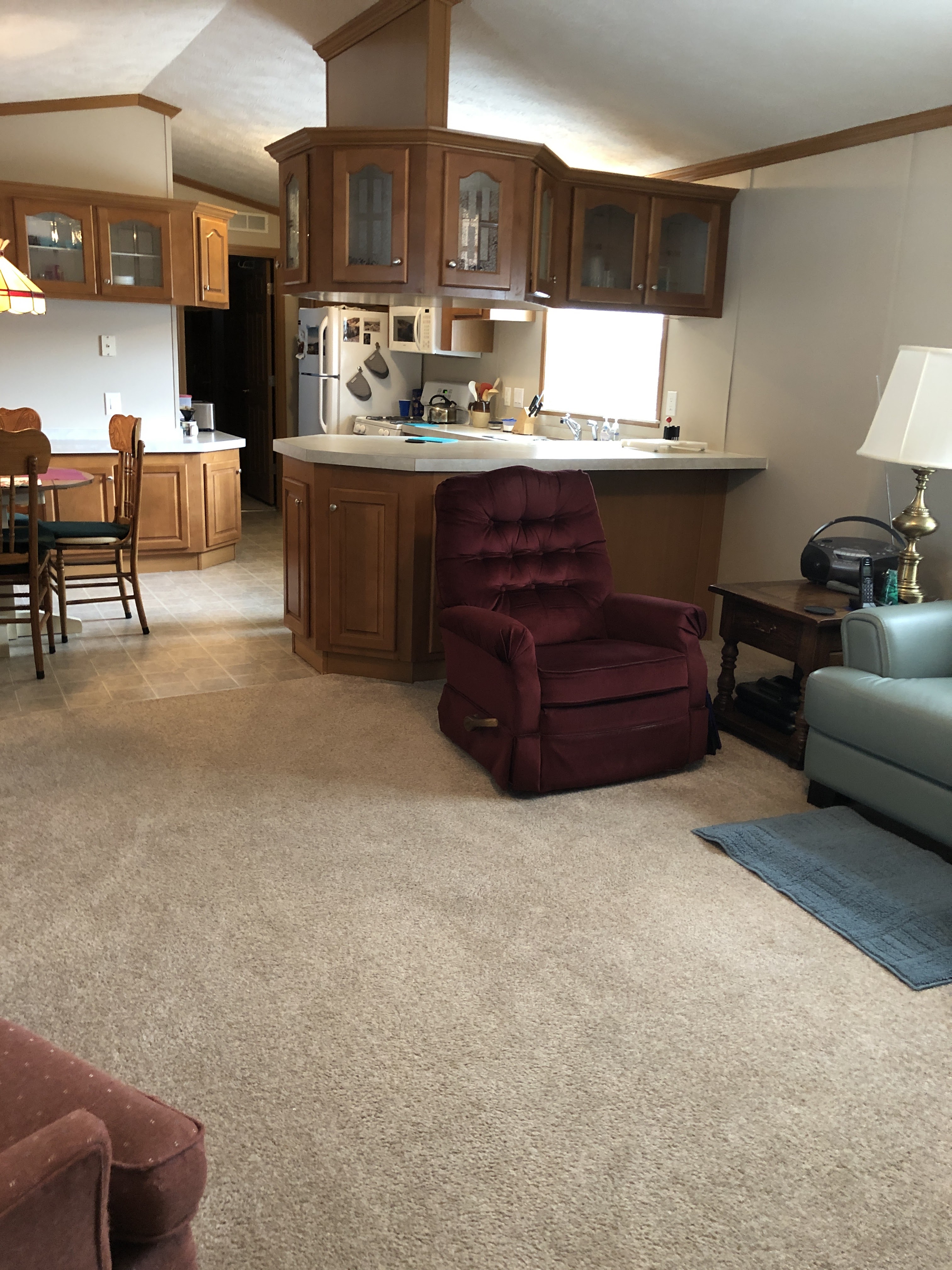
People who have not experienced a catastrophe think they have lots of time to do what they want. They also think they will always have lots of energy. A stroke destroyed the illusion that I have time and energy to waste. I cannot waste precious energy searching my entire house or even an entire room for an object. I also cannot afford to have an obsessive-compulsive disorder that makes me agitated every time an object is one inch out of place on a desk or coffee table. For me, organization has to save time and energy rather than be a goal that drives me crazy. Here are some examples of what I mean.
I don't mind spending a few minutes searching through a box of Christmas decorations or looking for a hand tool in a small tool box. I keep certain foods in the door of the refrigerator to shorten my search, but I don't mind if they slide around to different positions. I have very few music CDs so I keep them in two shoe boxes - one for classical and one for everything else. I don't buy much canned food so it wouldn't be worth it to turn all the cans so every label faces the same direction. When I look for a particular can it doesn't take much time to turn 5 or 6 cans around until I find the one I want.
On the other hand, I think it's good to be super-organized when people own hundreds of things. Remember when computer files were stored alphabetically and you had to know the exact name of a file to retrieve it? I am meticulous about saving computer files in folders like Finances and Photos. I used to own at least a hundred fiction books. To find books in my library, I alphabetized books by author but not by title. To stop buying extra copies of a book when I went shopping, I carried a folded sheet of book titles organized by author in my purse. When I froze lots of vegetables and meat in a big chest type freezer, my food was meticulously organized so I didn't have to move lots of packages to find the one I wanted.
For me organization is a choice rather than a compulsion or something that makes me feel guilty.
Home After a Stroke
Work Smarter Instead of Harder
May 13, 2013
May 4, 2013
OTs are Brainwashed and It's Not Their Fault
When I was an OT I didn't know I was brainwashed by Jebsen to think that only what the dominant hand does is important. Jebsen's strategy of making either hand do what the dominant hand does has been passed on by people who put Jebsen-inspired items in their tests. For 35 years, tests like the Fugl-Meyer and AMAT have asked clients to pick up small objects and do one-handed ADLs, like use a spoon to chase beans around a bowl. These are tasks the dominant hand does. Asking the non-dominant hand to do unilateral tasks it never did when the client was well is not a valid way to assess recovery.
As an able-bodied OT I didn't know what my non-dominant hand was doing except when both hands worked continously, like typing. I wish I had made my OT students wrap a string around their non-dominant wrist, clip the string to their waistband, and do a two-handed task. I wouldn't have asked them to cut meat or tie shoes. I would have used tasks from my post The Non-Dominant Hand Cries Out.
A palmar grasp keeps me from feeling frustrated every day. I've taken the cap off the toothpaste tube 6,570 times in nine years. Helping an adult regain a palmar grasp is a huge gift.
April 25, 2013
Braces Can Create a Leg Length Discrepancy
I acquired a leg length discrepancy from a brace so I wasn't surprised that a study found shoe inserts improved stroke survivors' gait. Here is what Mohapatra and his associates found (1). Eleven stroke survivors were given two weeks of PT, but people in the experimental group were also given a shoe insert for the sound leg. After two weeks the group who had shoe inserts walked significantly faster. Their weight bearing was also more symmetrical because the shoe insert forced them to put weight on the hemiplegic leg. Did the control group improve less because the hemiplegic leg with a brace was longer which forced them to use the sound leg more?
Every PT is taught how to check for leg length discrepancy. Yet my in-patient PT didn't check my leg length after I got my brace. A simple way to check is to put your thumbs on the two hip bone that sticks out in front (anterior superior iliac spine) and look to see if your two thumbs are level. If one leg is longer one thumb will be higher.
Three years after my stroke I saw a PT who was trained in myofascial release which champions the benefits of good body alignment. Tracy put her thumbs on my hip bones and told me to buy a *shoe insert at the store where I buy orthopedic shoes. I could feel a difference the moment I stood up with shoe insert under my sound foot. Stroke survivors should be evaluated for leg length discrepancy after they get a brace and taught about shoe inserts so we know what to do the next time we buy a new pair of shoes.
*Spenco shoe inserts come in four different shoe sizes in full versus 3/4 length and thick versus thin.
A shoe insert can be a low tech, relatively cheap way (e.g. $30) to improve gait.
Three years after my stroke I saw a PT who was trained in myofascial release which champions the benefits of good body alignment. Tracy put her thumbs on my hip bones and told me to buy a *shoe insert at the store where I buy orthopedic shoes. I could feel a difference the moment I stood up with shoe insert under my sound foot. Stroke survivors should be evaluated for leg length discrepancy after they get a brace and taught about shoe inserts so we know what to do the next time we buy a new pair of shoes.
*Spenco shoe inserts come in four different shoe sizes in full versus 3/4 length and thick versus thin.
A shoe insert can be a low tech, relatively cheap way (e.g. $30) to improve gait.
April 14, 2013
Update on the Releas and SaeboFlex Splints
Wearing the Releas splint during functional activities changed the way I do SaeboFlex exercises. I pick up a ball, transfer it to my hemiplegic hand, and set the ball on the table. To keep the ball from rolling off the table I place the ball in a glass custard cup. Then my hemiplegic hand pick ups the ball and drop it in a crate. I hope to graduate to an inverted peanut butter jar lid and then a towel as my ability to open my hand at arms length improves.
Labels:
hemiplegic hand,
stroke
April 3, 2013
People with Aphasia Should Reset the Bar
Since my stroke I have struggled to find the right word and utter coherent sentences when I'm stressed, barely awake, and tired at night. A daily calendar called "The Stupidest Things Ever Said" makes me feel better about using the wrong word and saying sentences that don't make sense. The fact that Steve Jobs practiced for ten hours before he made a ten minute speech at an Apple computer convention is more believable after reading the examples below. When I get embarassed about my ability to speak I try to remind myself to be more realistic.
"I will perish it forever." Johnny Logan accepting a award
"He has to start a little bit better than he has already begun." sportscaster David Pleat
"The wind won't make it easier, but it will make it less difficult." golf commentator Bernard Gallacher
"I will perish it forever." Johnny Logan accepting a award
"He has to start a little bit better than he has already begun." sportscaster David Pleat
"The wind won't make it easier, but it will make it less difficult." golf commentator Bernard Gallacher
Labels:
language skills,
stroke
March 25, 2013
Some Researchers Make Me Mad
Kitago concluded two weeks of constraint-induced movement therapy (CIMT) promoted task-specific compensation rather than a decrease in motor impairment (1). Compensation means using strategies that substitute for something that has been lost. Kitago and his associates came to this conclusion because stroke survivors got better at moving blocks and marbles, but couldn't transfer the movements CIMT taught them to a drawing task. The drawing task was difficult because it required exquisite wrist control while arm movements were constrained by a sheet of glass.
Another study used a different approach. Raghavan recorded hand movements with a motion capture device called the CyberGlove while able-bodied people and stroke survivors grasped three different shaped objects (2). Able-bodied people did a better job of contouring the shape of their hand to the shape of the object than stroke survivors. Able-bodied people contoured their hand to the shape of objects by bending the 2nd knuckle of each finger (PIPs) while stroke survivors bent the 1st knuckle (MPs). Would increasing PIP flexion improve stroke survivors' grasp of objects with different shapes?
I can relate to the second study. It feels like I have a precarious grasp on some objects. I understand what the first study is saying about transfer. It is difficult for me to use a hand movement in an unfamiliar position unless I've practiced it. However, able-bodied people also have trouble transferring motor skills when they work at the UPPER limit of their ability. NASA trains astronauts to make repairs by having them practice on exact duplicates of equipment they will work on during a spacewalk. Every tennis player does not play equally well on clay, grass, and concrete courts.
Bottom Line: I don't want treatment approaches dismissed by bad science. Lets study the efficacy of CIMT using observation instead of by making inferences about transfer from simple to difficult tasks.
Another study used a different approach. Raghavan recorded hand movements with a motion capture device called the CyberGlove while able-bodied people and stroke survivors grasped three different shaped objects (2). Able-bodied people did a better job of contouring the shape of their hand to the shape of the object than stroke survivors. Able-bodied people contoured their hand to the shape of objects by bending the 2nd knuckle of each finger (PIPs) while stroke survivors bent the 1st knuckle (MPs). Would increasing PIP flexion improve stroke survivors' grasp of objects with different shapes?
I can relate to the second study. It feels like I have a precarious grasp on some objects. I understand what the first study is saying about transfer. It is difficult for me to use a hand movement in an unfamiliar position unless I've practiced it. However, able-bodied people also have trouble transferring motor skills when they work at the UPPER limit of their ability. NASA trains astronauts to make repairs by having them practice on exact duplicates of equipment they will work on during a spacewalk. Every tennis player does not play equally well on clay, grass, and concrete courts.
Bottom Line: I don't want treatment approaches dismissed by bad science. Lets study the efficacy of CIMT using observation instead of by making inferences about transfer from simple to difficult tasks.
Labels:
#stroke,
hemiplegic hand
March 15, 2013
Handicapped Parking Lowers Your Taxes
Employers gave my family time off when I first had my stroke, but they won't do this indefinitely. Yet there are daytime visits to the doctor, therapy, and dentist that require waiting. Trips that cannot be put off like going to the bank, grocery store, and pharmacy to refill prescriptions that never run out at the same time. There are trips that take extra time, like trying on new clothes. Unless friends volunteer their time, driving us makes it difficult for family to help us stay in our homes. Providing transportation is a source of stress that wears a family down. This puts a disabled person one step closer to a long-term care facility.
Long-term care costs $40,000 to $100,000 a year so families spend their savings quickly. Guess what happens when I exhaust all my financial assets? I qualify for Medicaid and your taxes pay for my long-term care. If I were 96 I wouldn't feel so guilty because how much longer could I live? But I'm still young so New Jersey taxpayers could pay for my long-term care for decades. Being trained by a therapist who is certified in handicapped driving, passing the on-the-road test, modifying my car, and driving safely for nine years has helped me save thousands of dollars by staying in my home.
Handicapped parking is more than being close to the door. A wider parking space is equally important. It's difficult to open a car door without hitting the car next to you in a regular parking space. Able-bodied people solve this problem by leaving the cart at the back of their vehicle and walking the bags to the open car door. This strategy creates a fall hazard because I have poor balance. The wide space lets me pull the cart up to my open car door to unload my bags.
A wide parking space is important for another reason. If I open my car door just two feet when I get in and out of the car it is hard for my weak right leg to maneuver a brace that won't let me point my toes.
A wide parking space is also important for someone in a wheelchair. They need the car door to open widely so the disabled person can get in the wheelchair. A van with a side lift needs even more space.
Bottom Line: You want disabled people to drive and use handicapped parking because it helps us stay out of expensive long-term care facilities. The next time you borrow granny's handicapped parking tag remember -- you are making your taxes go up.
P.S. To see what long-term care costs in your state click on this survey. Notice the column that shows how much inflation increased costs in a five year period. For more information about handicapped parking click on http://www.stroke-survivors.org/2013/02/handicap-parking.html.
Long-term care costs $40,000 to $100,000 a year so families spend their savings quickly. Guess what happens when I exhaust all my financial assets? I qualify for Medicaid and your taxes pay for my long-term care. If I were 96 I wouldn't feel so guilty because how much longer could I live? But I'm still young so New Jersey taxpayers could pay for my long-term care for decades. Being trained by a therapist who is certified in handicapped driving, passing the on-the-road test, modifying my car, and driving safely for nine years has helped me save thousands of dollars by staying in my home.
Handicapped parking is more than being close to the door. A wider parking space is equally important. It's difficult to open a car door without hitting the car next to you in a regular parking space. Able-bodied people solve this problem by leaving the cart at the back of their vehicle and walking the bags to the open car door. This strategy creates a fall hazard because I have poor balance. The wide space lets me pull the cart up to my open car door to unload my bags. A wide parking space is important for another reason. If I open my car door just two feet when I get in and out of the car it is hard for my weak right leg to maneuver a brace that won't let me point my toes.
A wide parking space is also important for someone in a wheelchair. They need the car door to open widely so the disabled person can get in the wheelchair. A van with a side lift needs even more space.
Bottom Line: You want disabled people to drive and use handicapped parking because it helps us stay out of expensive long-term care facilities. The next time you borrow granny's handicapped parking tag remember -- you are making your taxes go up.
P.S. To see what long-term care costs in your state click on this survey. Notice the column that shows how much inflation increased costs in a five year period. For more information about handicapped parking click on http://www.stroke-survivors.org/2013/02/handicap-parking.html.
March 5, 2013
Sometimes Therapists Break My Heart
Therapists don't always act excited when I recover a small skill that doesn't produce a sea change like going back to work. They can sometimes act like a husband who doesn't understand why his wife is so happy when he puts the toilet seat down. Here are two examples of what I am talking about.
Melissa never got why I was so happy that my hemiplegic hand helps me scoop up chopped onions. I brought a pile of chopped onions to therapy and showed her what you see in the photo. Melissa's analytical response was "You use your hemiplegic hand as an assistive hand." I should have made Melissa use one hand to pick up a few pieces of slippery onion at a time until the whole pile was back in my container instead of letting her watch me do it.
The Releas splint helped my hemiplegic hand hold an envelope while my other hand stuffed a return slip from a bill and a check in the envelope. I was so happy I said "Look Cathy" and grinned while I waved the envelope in the air. Cathy gave me a small smile that seemed to say, "That's nice." Nice? I want the local TV station to come film me for the evening news. First of all, holding an envelope while putting a check in it is something I haven't done for eight years. More importantly, it is something I thought I would never do again for as long as I live. Finally, I live alone and pay the bills so this new skill is useful.
Why don't therapists always act excited? Fatigue may be one reason. Rushing from client to client when a therapist treats three people at once doesn't leave much time or energy for celebrating. Therapists also don't get to see how far I've come. They were not there when I wept because flopping my limp hand in the air made it look like a dead fish strapped on the end of a stick. Having a floppy hand that can now hold a thin envelope feels like a small miracle instead of one small step forward. The next time I'm thrilled and don't get much of a reaction I'll remind myself to have faith. I'll say "Some day in a quiet moment you will see my grinning face and feel good about what you helped me achieve today."
February 24, 2013
My Heart Doesn't Get to Choose
I used to think emotions like joy and love are good and emotions like sadness and anger are bad.
Now I believe that how I choose to react to my emotions is what's good or bad. It's bad when I'm so
pre-occupied by mental chatter that I let moments of joy fly past me unnoticed. It's good when I stop what I'm doing and take a few seconds to appreciate when I'm happy. It's bad when I rerun upsetting episodes in my head. It's good when I use anger to propel me towards a solution.
IF I could go back and tell my younger self to stop running mental tapes that upset me, I doubt it would make any difference. First, when I was young I had the tremendous energy it takes to sustain emotional drama. Second, being snubbed recently reminded me of how intense emotions can be. Emotions can feel so real that they seem unstoppable.
A stroke took away the energy I need to stay upset for a long time. I was upset the day I was snubbed. By the next day -- not so much. By the third day I remembered that letting this person upset me gives her power. By the fourth day I remembered I was upset for decades but can no longer remember most of what upset me. Hence the irritating platitude -- this too shall pass. My heart doesn't get to choose which emotions I experience, but I've learned that how I react to those emotions is a conscious choice. My stroke has both taken away and given.
Now I believe that how I choose to react to my emotions is what's good or bad. It's bad when I'm so
pre-occupied by mental chatter that I let moments of joy fly past me unnoticed. It's good when I stop what I'm doing and take a few seconds to appreciate when I'm happy. It's bad when I rerun upsetting episodes in my head. It's good when I use anger to propel me towards a solution.
IF I could go back and tell my younger self to stop running mental tapes that upset me, I doubt it would make any difference. First, when I was young I had the tremendous energy it takes to sustain emotional drama. Second, being snubbed recently reminded me of how intense emotions can be. Emotions can feel so real that they seem unstoppable.
A stroke took away the energy I need to stay upset for a long time. I was upset the day I was snubbed. By the next day -- not so much. By the third day I remembered that letting this person upset me gives her power. By the fourth day I remembered I was upset for decades but can no longer remember most of what upset me. Hence the irritating platitude -- this too shall pass. My heart doesn't get to choose which emotions I experience, but I've learned that how I react to those emotions is a conscious choice. My stroke has both taken away and given.
Labels:
#stroke,
frustration
February 15, 2013
Introduction to My New Releas Splint
After my broken arm healed my OT let me try a dynamic splint called the Releas. It uses a short piece of fishing rod to assist with hand opening. Pre-requisite skills for using the Releas splint are a small amount of shoulder and elbow movement and the ability to squeeze the examiner's hand and then stop squeezing. The splint helps you open your hand to grasp and release thin (e.g. envelope) and small objects (e.g. deodorant bottle). You can watch videos of a stroke survivor using the Releas splint.
My OT began my Releas program at an intermediate level by having me drop objects in a crate. Then she had me place objects on a table which requires more precise release. I also open my hand after I hold pill and deodorant bottles resting on my thigh as the other hand removes the cap. Releasing my grip from objects that sit vertically doesn't allow gravity to help me. A blue clip board on my lap helps you see the black splint resting on my black pants.
My early progress includes regaining grip strength when I am not wearing the splint. I no longer drop my cane after I put it in my hemiplegic hand so my sound hand can open a door. This is particularly helpful at a store when I have to quickly catch a closing door when the person in front of me doesn't hold it open. I no longer rest a travel-size shampoo bottle on my knee and push out shampoo by leaning on the bottle with my elbow. Now my hemiplegic hand squeezes shampoo out so my sound hand can catch it.
The Release leaves the fingertips free to grasp objects so I can wear it during functional tasks. However, many functional tasks that provide repetition like folding laundry don't occur every day. We need repetition to create what psychologists call flow. Flow happens when movement feels effortless.

On the left is the set-up for filling my pill box each week. On the right is a simulated version I do every day. Two sets of ten work out the stiffness. Two more sets and my hand opens smoothly instead of jerking open in small increments. The Releas splint creates flow -- an addiction that keeps me motivated.
My early progress includes regaining grip strength when I am not wearing the splint. I no longer drop my cane after I put it in my hemiplegic hand so my sound hand can open a door. This is particularly helpful at a store when I have to quickly catch a closing door when the person in front of me doesn't hold it open. I no longer rest a travel-size shampoo bottle on my knee and push out shampoo by leaning on the bottle with my elbow. Now my hemiplegic hand squeezes shampoo out so my sound hand can catch it.
Labels:
#stroke,
hemiplegic hand
Subscribe to:
Posts (Atom)