Showing posts with label health care system. Show all posts

August 3, 2022

Staying Out of a Nursing Home

Today I got a splinter in my sound hand as I walked down my front steps while holding onto a wooden railing.  Thank God I know how to remove a splinter one-handed so I do not need live in a nursing home to get nursing care.  My mother removed splinters by picking at the skin over the splinter with the end of a sewing needle.  This was painful and required delicate fingertip pinch.  A stroke took away my ability to grasp a needle between my thumb and index finger.
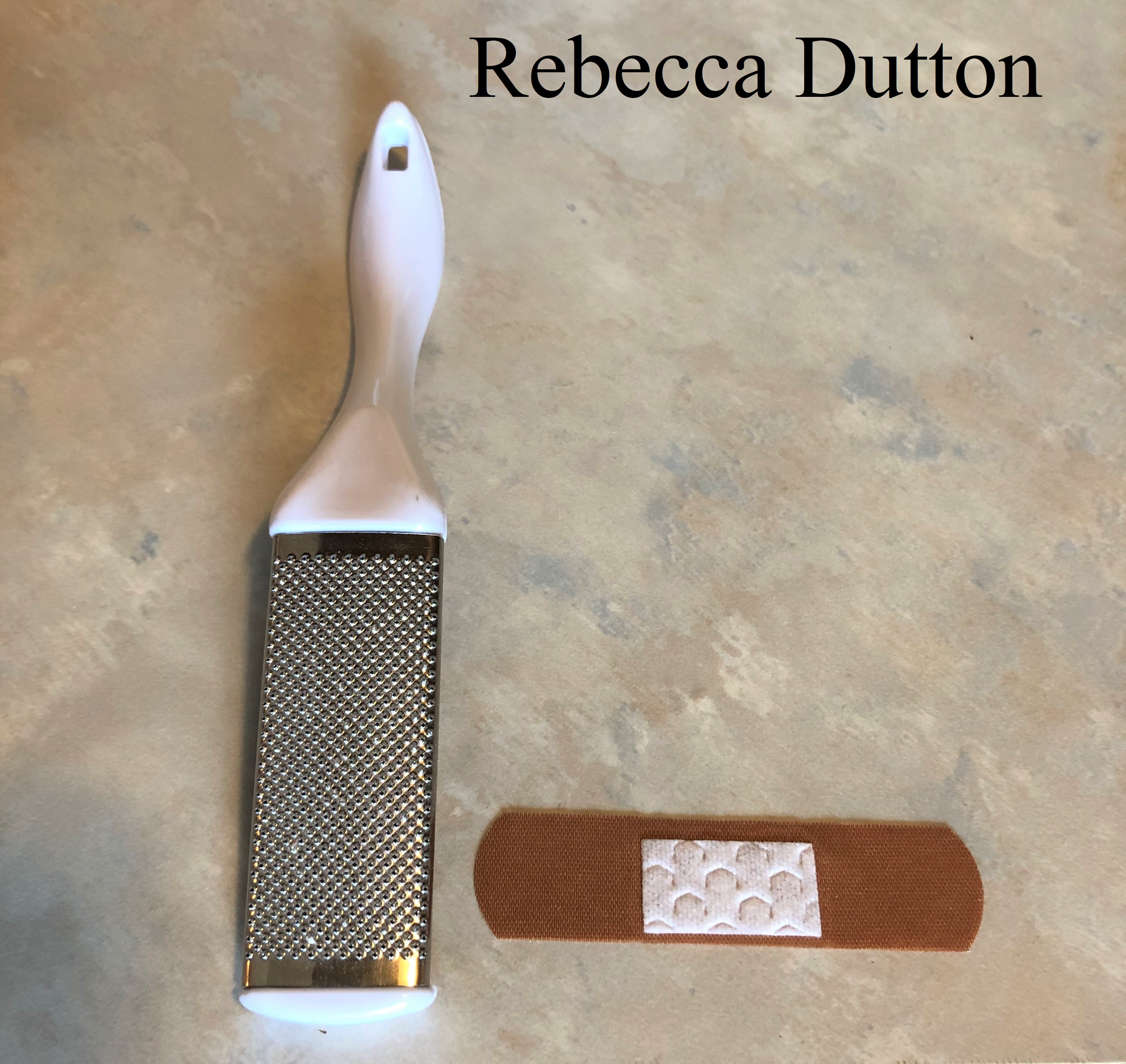
My solution is to use a rasp which removes callouses on the bottom of the feet.  I trap the rasp on a counter with my affected hand.  Then I rake the rasp over the splinter.  I apply gentle pressure and make repeated passes to slowly remove skin.  Today the splinter popped out as soon it was fully exposed.  I followed with Betadine solution.  CAUTION: This method only works for splinters that are close to the surface.

I also know how to put a band aid on my finger one-handed.        I put the band aid close to the edge of a counter.  I put the affected area of my finger on the pad in the center.  Then I roll my finger to the left to get the left side of the band aid to stick to my finger.  Without lifting my hand I roll to the right so the right side of the band aid sticks to my finger.  There is usually a small tail that is not stuck down so I grab it with my teeth and stick it to my finger.  A 2nd reason I do not need to live in a nursing home to get nursing care.  homeafterstroke.blogspot.com

July 28, 2022

Toilet Training is a Disaster

OTs evaluate how clients get on and off the toilet.  However, aides are the ones who deal with dressing and undressing during toileting.  Aides have large caseloads so they speed up toilet time by doing everything for their clients.  This assistance masks safety issues.  

Small weight shifts while pulling my pants up threw me off balance.  I had to repeatedly twist my trunk so my sound could reach across the front of my body to get my underpants over the paralyzed hip and reach behind me to get my underpants over the paralyzed hip in back.  Continue to twist when I pull my pants up over my affected hip.  It took 2 weeks for my standing balance to improve enough for me to feel safe when I pulled my pants up without an aide in the bathroom

Toileting also requires repeated turning.  After I walk into the bathroom I have to turn 180 degrees to close the door at home or a doctor's office.  I am facing the door I just closed so I have to turn 180 degrees to walk to the toilet.  When I get to the toilet I have to turn 180 degrees so I can sit down.  I have to turn 180 degrees after I stand up so I can flush the toilet.  

OTs do not evaluate gait in the bathroom because ambulation is PT's domain.  PTs do not evaluate standing balance while twisting the trunk and repeatedly turning 180 degrees because toileting is OT's domain.  Yet needing 24 hour assistance for toileting can lead to a nursing home.  This is a severe consequence so OTs and PTs need to stop worrying about stepping on each others toes.  homeafterstroke.blogspot.com

December 10, 2021

Glad I was a Therapist Before I was a Professor

I am glad I worked as a therapist before I became a professor.  School creates a false sense of security.  If you do not know the answer, you can ask teachers what they think the right answer is.  Book learning is a good place to start, but it does not tell you what to do when some clients do not respond to treatment that works well for many clients.  Therapists are humbled when they have to say "I don't know" when information taught in school does not work.  Therapists have to generate their own solution and watch carefully to see if it helps.

In school you learn information in one unit and then move on to the next unit.  However, the right thing to do in the clinic is a moving target that keeps changing as the client improves.  I was reminded of this when my in-patient PT said I was getting better.  I complained that walking was not getting any easier.  She said she was helping me less.  I never thought to tell my clients this either.  homeafterstroke.blogspot.com

November 8, 2021

Achieving Long-Term Goals is Complicated

Achieving long-term goals is complicated for people who have a chronic condition like a stroke.
It took five OTs a year to transform my relationship with food.  My in-patient OT made sure I knew how to make myself presentable when I went to live with my friend Arlene after rehab.  I would have been embarrassed to sit at Arlene's dinner table with sweaty pajamas and greasy hair.  My 
in-patient OT also addressed cold food prep so I could prepare my breakfast and lunch while Arlene was at work.  My home health OT addressed advance cooking skills I would need when I returned to my home.  Two rounds of out-patient OT prepared my arm and hand to maneuver a shopping cart around numerous obstacles at a grocery store.  A fifth OT provided certified driver training so I no longer had to spend two hours with paratransit to go to and from the grocery store.

Progress towards long-term goals is difficult to achieve for two reasons.  First, institutional autonomy does not allow communication between staff who work at in-patient, home health, and out-patient agencies.  Only the client sees all the steps towards a long-term goal.  I kept the momentum going by telling my OT "the next thing I want to do is ...".  Second, in the 16 years since my stroke no doctor recommended out-patient OT or PT.  They gave me a prescription for therapy when I asked for it, but they never asked how it helped me.  I had to go on-line to find out-patient clinics near me and ask friends if they would recommend a therapist they had gone to.
homeafterstroke.blogspot.com

August 12, 2021

Are You Disabled?

A physical deficit may be permanent but feeling disabled can change depending on the expectations and resources of a specific environment (1).  Let me give you an example.  I heard people in the hospital say they cannot wait to eat a home-cooked meal.  But there is a catch.  At home people may be dismayed if "pop-pop" shows up for a meal when he needs a shower and a shave, is dressed in his pajamas, and has bed head.  I do not think dietary staff who deliver our meals expect patients to look good.  Resources can also be different in different situations.      In the hospital, aides help people with A.M. care and the dietary department cooks.  At home, the person who cooks and assists someone with an impairment may be the same person.  You may feel more disabled at home because your family has different expectations and resources than the hospital.  

Whether you are disabled also depends an whether you think independence should always be the goal.  Phalen says no one is truly independent (1).  Many people do not cut their hair, change the oil in their car, or prepare their tax returns.  However, able-bodied people help each other by dividing up a list of tasks.  Stroke survivors who have only one good hand may not be able to finish what they started unless they get help for specific steps during a task.  Repeatedly waiting for help during a task can get on your nerves.  My thumb leans on the independence side of the scale.  homeafterstroke.blogspot.com

1. Phalen SK. Constructions of disability: A call for critical reflexivity in occupational therapy. Canadian Journal of Occupational Therapy. 2011;78, 164-172. doi:10.2182/cjot.2011.1.78.3.4.

July 19, 2021

I Am Angry

An article in Stroke magazine made me angry.  The authors said they could predict independent walking three months after a stroke based on early status after the stroke (1).  These predictors included younger age, good leg strength, good sitting, continence, no cognitive impairment, no neglect, and independence in activities of daily living. 

What made me angry is that the authors recommended these data be used to decide who should get rehab and who should go straight to residential care (1).  Data that describe groups of people cannot accurately predict which group a specific individual will end up in.  For example, data that says a chemotherapy treatment is 80% effective does not tell you if a client if will be in the 80% that will be cured or in the 20% that will die.  

There is no such thing as a perfect prediction because unaccounted for variables can change an outcome.  For example, years ago I went to the nursing floor and found two nurses transferring my client from a wheelchair to the bed.  When I asked why I could transfer him with minimum assistance but he needed two nurses to do it he said "therapists make you do things for yourself and nurses do things for you".  He did not show the least bit of embarassment when he said this.    I wondered which rationale he applied to his wife.  

To withhold care because of early status is *****!   It it fairer and more accurate to make decisions based on the amount, speed, and consistency of improvement.  homeafterstroke.blogspot.com

1. Preston E, Ada L, Stanton R, Mahendran N, Dean C.  Prediction of independent walking in people who are nonambulatory early after stroke: A systematic review.  Stroke. 2021 July. doi: 10.1161/STROKEAHA.120.03245.

June 16, 2021

Qualifying for Disability Benefits

I was surprised to learn that having a stroke was not enough to establish my need for paratransit.  When I had an interview with paratransit services they asked me to give examples of why I could not take a regular bus.  My sound hand has to manage a cane and my hemiplegic hand cannot insert money in the fare box.  If I do not sit down quickly, the lurching movement of the bus would make me fall because I have poor balance.

Approval for social security disability (SSD) also required explaining how specific deficits interfered with my ability to do specific job related tasks.  Being one-handed meant I could not demonstrate or help OT students perform bimanual therapeutic techniques.  The physiatrist who filled out his section of the SSD application form was able to document my inability to perform functional tasks because he heard therapists talk about me in team meetings.  Neurologists do not evaluate or document the loss of independence that is needed to qualify for disability benefits.  homeafterstroke.blogspot.com

September 9, 2020

I Am Really Angry

Strokes that affect blood vessels at the back of the brain are associated with significant diagnostic error (1).  This finding mirrors my stroke experience.  Sixteen years ago my brainstem stroke started when I repeated fell back on my bed while putting on eye make-up.  In the emergency room I was able to talk and sign my name so I was left alone and fell asleep.  When I woke up I called to find out if I could have something to eat because I did not have breakfast.  A staff member did a neuro check and looked concerned when I could not squeeze her hand with my right hand.            A neurologist was not on duty so it took a while before someone ordered brain scans.

Abedi's suggestion that hospitals should use artificial intelligence to improve diagnosis of these strokes really makes me angry.  Facilities do not need to buy expensive computer programs to diagnose a stroke in posterior blood vessels.  Health care professionals need to forget the old F.A.S.T. warning signs and learn the new B.E.F.A.S.T.  The B. and E. are signs of a posterior stroke like a brainstem stroke. 

B = Balance.  SUDDEN loss of balance/dizziness/coordination is not caused by an ear infection.  

E = Eyes.  SUDDEN difficulty seeing out of one or both eyes (e.g. blurred or double vision). 

F = Face.  Weakness of one side of the face that produces an uneven smile; facial numbness.

A = Arm.  Weakness of one arm (e.g. unable to raise both arms evenly).

S = Speech.  Slurred speech; trouble understanding speech, difficulty repeating simple phrases

T = Time lost = brain lost.  Call 911 immediately.  

homeafterastroke.blogspot.com

1.  Abedi A, et al. Using artificial intelligence for improving diagnosis in emergency departments: a practical framework. sagepub.com.  August 25, 2020. doi.org/10.1177/1756286420938962. 

August 11, 2020

Safety Precautions Rocket Me to Independence

I am divorced, was not able to have children, and have one brother who lives 800 miles away so I am more likely to end up in a nursing home than some stroke survivors.  Fortunately, precautions that facilities use to keep people safe propelled me to independence.  In the rehab hospital I made the mistake of wheeling myself out to the patio when I was done with therapy for the day. The aide who was sent to find me said I could not sit outside alone.  When I pointed to people who were sitting alone she whirled my wheelchair around and took me back to my room.  The last time I was dragged inside I was probably three years old.  A psychologist said the staff were afraid I would wander off if they let me go outside, but he brokered a compromise.  I could sit outside if I came back upstairs and wrote down where I was going on a clipboard. 

Safety precautions are good.  The problem is staff who rigidly apply precautions to everyone. 
Did anyone read my chart to learn I had a stroke in the back of my brain (brainstem) instead of the cortex where cognitive functions are located?  I was treated like my roommate who was so confused she tried to use the TV remote as a telephone.  The staff attached a sensor to me at night to keep me from getting out of bed.  Every time I rolled onto my side I triggered a very loud alarm and had to wait for an aide to come shut it off.  When I finally complained, a nurse said they would stop using the sensor if I signed a release form saying they were not liable if I fell out of bed.  How long they would have used it if I had not objected? 

When I toured an assisted living facility I was upset again by procedures designed to keep people safe.  The director who gave me a tour said "elderly people prefer to have a nurse give them their medication."   If a nurse dispensed my pills, my day would revolve around visits to the nurse because I take pills three times a day.  I am not living in an apartment if the nurse can open my door with a master key to give me my pills if I sleep in.  homeafterstroke.blogspot.com

May 3, 2020

Caregiver Disconnect

Forty caregivers of stroke survivors reported they often felt abandoned (1).  This may sound surprising unless you know therapists usually do not talk to caregivers.  Lutz found that "during rehabilitation many of these caregivers still hoped and expected that the stroke survivor would return to pre-stroke function (p. 8)."  Caregivers reported not knowing how to help when their loved one went home.  One caregiver said when her husband struggled with a task she helped by doing it for him.  This solution produces muscle weakness and mental decline which increases the caregiver's burden.

As an OT I was oblious to the stress that caregivers experience.  They have to: 1) take on their partner's chores, 2) be a therapist, and 3) be a case manager.  A wife may take out the garbage and change the batteries in smoke detectors.  A husband may clean toilets, do laundry, and cook.  When caregivers are therapists, they may help with self-care like bathing, set up home exercises, and deal with a stroke survivor's bad moods.  When caregivers are case managers, they schedule doctor and therapy appointments, arrange transportation, deal with insurance companies, and make multiple trips to the drug store to pick-up medication.  Many caregivers do this without professional psychological support or respite care.  Now I see that caregivers are angels.   homeafterstroke.blogspot.com

(1).  Lutz B et al. Improving stroke caregiver readiness for transition from inpatient rehabilitation
        to home. The Gerontologist. 2016; Vol 00:No.00,1-10. doi10.1093/geront/gnw135.

March 10, 2020

What Therapists Do Not Know About Falling

I recently heard a doctor on TV say elderly people should not look down when they walk.  He said using vision to prevent falls weakens the balance system.  Yet stroke survivors look down because even tiny obstacles can be dangerous.  Here is an example.  I had a terrible fall while walking on a slate walkway.  I fell after I stubbed my toe on the edge of a tile that was tilted up about an inch. Thank God I did not fall forward and smack my forehead on the slate sidewalk.  I instinctively dropped my cane and threw my sound arm forward to try to catch myself.  This sudden arm movement rotated my body slightly to the right so I fell on the grass.  I hit the ground so hard I had dirt and pieces of grass caught under my glasses after my face hit the lawn.

Therapists may not know how violently stroke survivors can fall.  Human subjects committees would not allow researchers to put test subjects on a tilt plate that can cause a sudden fall without first putting test subjects in a safety harness.  PTs have to be conservative when they walk stroke survivors because they cannot have anyone fall on their watch.  homeafterastroke.blogspot.com